
Helping a Loved One with Addiction: When Love Turns Into Survival
Are you, like many others, struggling with helping a loved one with addiction? She rolled over and looked at the clock; it read 3:11AM. She hadn’t been able to sleep because he still wasn’t home. Worry had become her way of life. She couldn’t remember her last night of good sleep—or her last day without feeling like she was navigating a minefield, trying to avoid the next emotional explosion with her husband. The happiness they once shared felt like a distant memory.
He had always been a heavy drinker, but she believed he would “outgrow it.” Instead, adulthood brought careers, a home, children—and a steady escalation of his drinking.
The Hidden Toll of Living with an Alcoholic Spouse
Over the years, his drinking worsened. In the past two years, it had taken over. He drank nearly every night. Weekends disappeared into intoxication. Home life unraveled. Their children began to withdraw. He couldn’t show up as a parent. Arguments replaced connection. Responsibilities fell on her shoulders until it felt like she was raising four children instead of three.
She tried everything—pleading, anger, silence, control. Nothing worked for long. Her oldest child, now 15, grew frustrated: “Why can’t you do something about Dad?”
That question cut deep. She blamed herself. At work, she managed people successfully—so why couldn’t she manage this? The stress manifested physically: constant stomach pain, exhaustion, anxiety, depression. Isolation followed. She stopped talking to friends. Shame and secrecy closed in.
Why Addiction Is Called a Family Disease
Suddenly, the sound of his car in the driveway broke the silence. Relief. Anger. Resentment. “Thank God he’s home safe,” she whispered—while bracing for the inevitable: another cycle of confrontation, apologies, and broken promises.
Stories like this are far more common than most people realize.
Approximately 10–12% of Americans live with Substance Use Disorder (SUD), and each person directly impacts at least 3–4 others. In a room of 100 people, roughly half are affected—either personally or through someone they love. That’s why addiction is often called a family disease.
Research from the Substance Abuse and Mental Health Services Administration confirms that addiction significantly impacts family systems, increasing rates of anxiety, depression, and chronic stress among loved ones.
Codependency, Control, and Emotional Exhaustion
If you see yourself in this story, you’re not alone—and you may not fully realize how much this has affected you.
Over time, many loved ones:
- Try to control or fix the addiction
- Neglect their own needs
- Experience burnout, anxiety, or depression
- Lose connection with their own identity
This pattern is often referred to as codependency, and it can quietly take hold in families affected by addiction.
What Actually Helps: Support for Families in Addiction
It is essential to understand this truth:
You cannot fix someone else’s addiction—but you can take care of yourself.
At Pavillon, we emphasize that healing must include the entire family system—not just the individual struggling with substance use.
Pavillon’s Family Program
Pavillon offers a dedicated Family Program designed to support loved ones through:
- Education about Substance Use Disorder
- Understanding codependency and enabling behaviors
- Learning healthy boundaries
- Improving family communication
- Building a support system
Most importantly, families discover they are not alone.
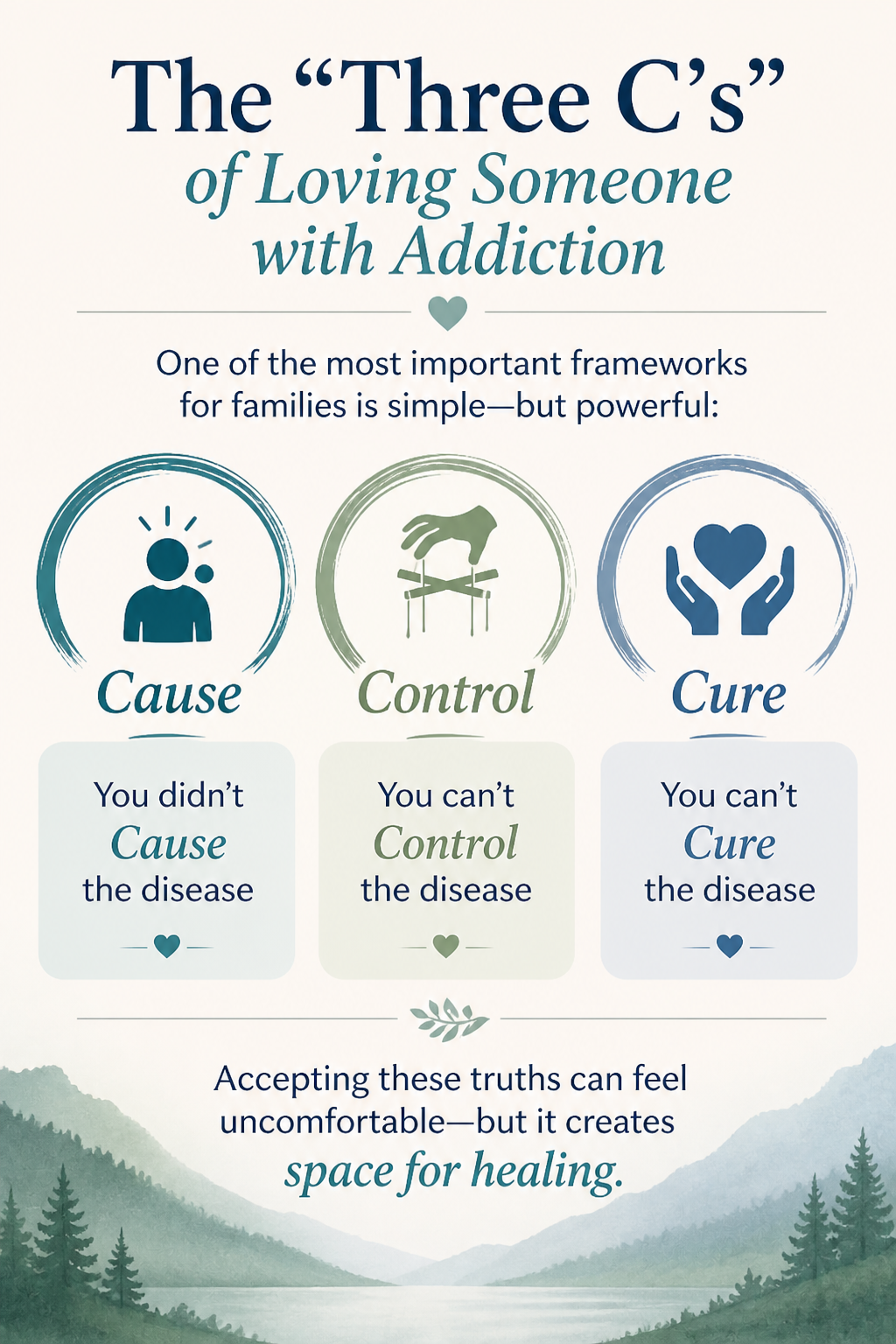
The “Three C’s” of Loving Someone with Addiction
One of the most important frameworks for families is simple—but powerful:
- You didn’t Cause the disease
- You can’t Control the disease
- You can’t Cure the disease
Accepting these truths can feel uncomfortable—but it creates space for healing.
Finding Your Way Back to Yourself
If you love someone with addiction, your healing matters too.
Consider taking steps such as:
- Attending Al-Anon or Nar-Anon meetings
- Working with a therapist experienced in addiction and family systems
- Reconnecting with trusted friends or spiritual support
- Setting and maintaining healthy boundaries
One of the most powerful shifts happens when you allow others—who truly understand—to walk alongside you.
A Path Forward: Healing for You and Your Family
The woman in this story isn’t weak. She’s overwhelmed. And like so many others, she has options—even if they don’t feel obvious yet. Healing begins with awareness. It grows with support. And it becomes sustainable when you stop trying to manage the addiction—and start caring for yourself.
At Pavillon, we believe recovery is not just for the individual—it’s for the entire family. So if you are helping a loved one with addiction, are are ready to take that one courageous step:
reaching out. Call the admissions team today at 828-694-2300.