
Grief and well-being in addiction recovery
How do grief and well-being in addiction recovery connect? Active alcoholism or addiction takes up time, energy, and resources. And so it brings losses and lost opportunities. These losses might include: friendships, trust, time, a job, etc.
Active recovery takes up time, energy, and resources. And it also brings losses. Loss of people, places, and things that contributed to our disease. And using our favorite substance – like it was our best friend, and trusted crutch.
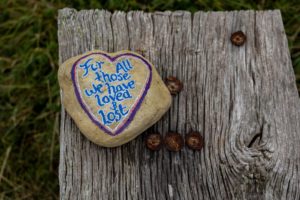
Grief in everyday life
In everyday life, for all people on this planet, we face losses and grief. Loss of a pet, a physical ability, health, or death of a loved one. In everyday life we might experience loss or grief through things like moving or leaving a job. Or other things we see as good but bring about major change.
Some losses are the loss of an abstraction. Loss of a citizenship. Or a sense of self. And the loss of identity. Or loss of a membership. Of a title, role, or self-worth.
In everyday society grief is often downplayed and not respected enough. While our workplace might only give us a few days, we know grieving takes time. Grief is a natural feeling. Grieving is a natural healing process, is not pathological, and doesn’t need to be therapized. But grief work takes time, can be messy, and is not linear. Some losses will always be there and feel like a loss. But we can learn new ways to keep living well and make sense of losses.
Grief and well-being in recovery
In the first few years, or first several years of recovery, resentments are a “chief offender” that lead to relapse. Well, the loss of a close loved one is often next on the list of relapse justifications. And those losses can be a natural occurrence or natural part of life. Some losses seem unnatural or out of order.
- Is our recovery ready?
- Do we have coping skills in place?
- Do we have a group of people who will support us in our recovery and rally around us?
- Are we working a program for ourselves, for today?
Grieving has been famously studied by Sigmund Freud and Elizabeth Kubler-Ross. And grief is an area of interest for many clinicians and researchers more recently. But what does the wisdom of our recovery fellowship tell us? And what does the inner circle of our fellowship say?
Healthy grieving
Proper grieving or grieving well, if needed, can be a gift. And it can lead to more gifts. Have we faced reality? And how our loss has impacted us? Have we come to acceptance? And have we found gratitude for what we did have, and does that gratitude help carry us?
Have we found the beauty of real relief that only comes by letting go? Or are we stuck in our “self”, have we built a barrier against our own program, and are we in denial?
Losses happen during our disease. And some are caused by our disease. Losses happen during our recovery. And some are caused by our recovery.
Questions might include:
- Am I ready to grieve?
- Is my program strong enough to handle a loss?
- What do I need to give up next?
Loss is inevitable. What can I do for today to help myself make my recovery durable?
Photo credit: unsplash.com/photos/do0KG7sLttM